
Rethinking What “Green Travel” Really Means
Sustainable travel is often framed as a simple choice — buy the most fuel-efficient vehicle possible and reduce emissions. But real environmental responsibility is more complex than that. It includes how a vehicle is used, how often it sits idle, what resources are required to produce it, and how many vehicles are needed to support one lifestyle.
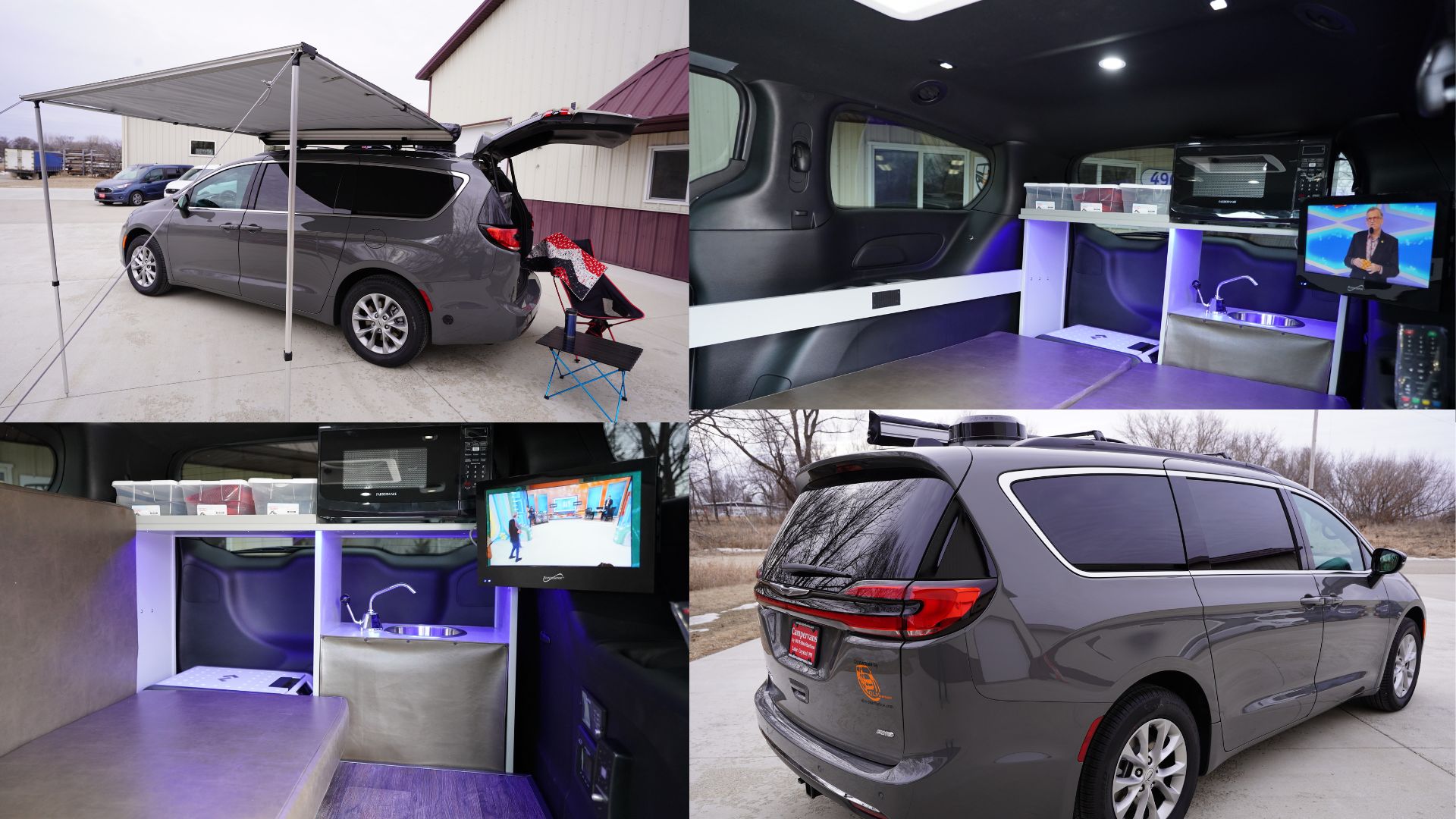
The Mini-T Campervan represents a practical, real-world approach to greener travel by focusing on total efficiency rather than a single metric. Instead of viewing sustainability only through fuel consumption, it considers how transportation, recreation, and everyday driving can be combined into one streamlined solution.
This broader perspective is what makes the Mini-T Campervan an increasingly relevant option for travelers who want to reduce waste, control costs, and simplify how they move through the world.

Total Cost of Ownership as a Sustainability Metric
Environmental impact and financial efficiency often move in the same direction. Vehicles that require fewer resources to operate, maintain, store, and replace naturally place less strain on both budgets and the environment.
A useful way to evaluate this is through total cost per mile — a measure that includes acquisition, fuel, insurance, maintenance, storage, and long-term value. When all of these factors are considered together, efficiency becomes more than just miles per gallon. It becomes a measure of how much energy, material, and infrastructure are required to support a vehicle throughout its entire lifespan.
Compact campervans designed for both daily use and travel — like the Mini-T — reduce overall resource consumption by minimizing redundancy. When one vehicle replaces the need for multiple specialized vehicles, ownership becomes more efficient in every measurable way.
One Vehicle Serving Multiple Roles
Many households maintain separate vehicles for different purposes — a daily commuter, a recreational vehicle, and sometimes additional specialty transportation. Each vehicle requires manufacturing, maintenance, insurance, parking space, and eventual replacement.
A dual-purpose travel van changes that equation.
By functioning as both an everyday vehicle and a fully campable travel van, the Mini-T Campervan reduces the need for multiple vehicles in a household. Fewer vehicles mean fewer resources used in production, fewer materials consumed over time, and less energy required for long-term ownership.
This consolidation of function is one of the most overlooked ways individuals can reduce their transportation footprint. The environmental impact of manufacturing, maintaining, and storing several vehicles is significant — and often invisible in traditional sustainability discussions.
Efficiency That Extends Beyond Fuel Use
Fuel economy matters, but it represents only one part of a vehicle’s environmental profile. Long-term efficiency also includes durability, lifespan, storage requirements, and how frequently the vehicle is actually used.
Vehicles that remain parked for most of the year — as many recreational vehicles do — still carry the environmental cost of their production. They require materials, transportation, maintenance, and storage space regardless of how often they move.
A compact campervan that is used regularly as transportation and travel equipment distributes its environmental impact across more miles and more real-world use. This continuous utilization improves overall efficiency by ensuring that the resources invested in the vehicle provide consistent value.
Energy Independence While Traveling
Traveling often requires access to electricity for lighting, refrigeration, and basic comfort. Traditional camping setups frequently depend on external power sources or generators, which introduce additional fuel consumption and emissions.
The Mini-T Campervan’s integrated power system supports essential onboard functions without requiring a generator or constant shore power connection. Charging through solar, the vehicle alternator while driving, or standard electrical hookups allows travelers to operate efficiently in a wide range of environments.
This self-contained approach reduces reliance on external energy sources while supporting flexible travel patterns that do not depend on large infrastructure systems.
A Practical Alternative to Oversized RV Travel
Large motorhomes and towable RVs can provide significant interior space, but they often require dedicated storage locations, higher fuel consumption, and specialized maintenance. They are typically used for limited periods and remain parked the majority of the year.
Compact campervans offer a different model — one based on continuous usability. They are easier to drive, simpler to store, and practical enough to serve everyday transportation needs. Because they integrate more naturally into daily life, they tend to be used more frequently and efficiently over time.
This shift from occasional use to regular use changes the overall environmental and economic equation of travel.

Financial Stability as Part of Sustainability
Sustainable choices must also be financially sustainable to remain viable over the long term. Transportation solutions that require significant additional infrastructure, unpredictable energy costs, or specialized storage can create economic pressure that ultimately limits adoption.
Compact, fuel-efficient travel vans offer a stable and predictable ownership model. Their manageable operating costs, reduced storage needs, and dual-purpose functionality provide consistency in an environment where energy and transportation costs can fluctuate significantly.
Financial resilience supports long-term sustainability by making efficient travel practical rather than theoretical.
A Broader View of Responsible Travel
As sustainability conversations expand, more people are evaluating the full lifecycle of the products they use — from food production to clothing manufacturing to transportation systems. Travel is increasingly viewed through the same lens.
Responsible travel is not defined by a single feature or technology. It is shaped by how efficiently resources are used over time, how often equipment is utilized, and how many redundant systems are required to support one lifestyle.
By combining everyday mobility with genuine travel capability in a compact format, the Mini-T Campervan reflects this broader, more comprehensive approach.
A Measured Path Toward Efficient Mobility
Green travel does not always require radical changes or complex technology. Sometimes it begins with simplifying what already exists — using fewer vehicles, consuming fewer resources, and making the most of what is owned.
The Mini-T Campervan represents a measured and practical step in that direction. It supports mobility, recreation, and daily transportation within a single efficient platform designed for consistent use.
For travelers seeking a balanced approach to sustainability — one grounded in practicality, efficiency, and long-term usability — this model of travel offers a thoughtful and enduring solution.
Learn More:
