
NEWS
Motorhome vs Trailer: Which RV Option Fits Your Travel Style?
Choosing between a drivable motorhome and a pull-behind trailer is one of the most common decisions facing new RV buyers. Each option offers distinct advantages, and the right choice often depends on how you plan to travel, where you plan to go, and how often you expect to use it.
Rather than focusing only on size or features, it helps to look at how each option performs in real-world travel situations.
Maneuverability and Driving Experience
Motorhomes are generally easier to maneuver than trailers, particularly for drivers who are not accustomed to towing. Because everything is contained in one unit, there is no need to manage the added length, turning radius, or backing challenges that come with a trailer.
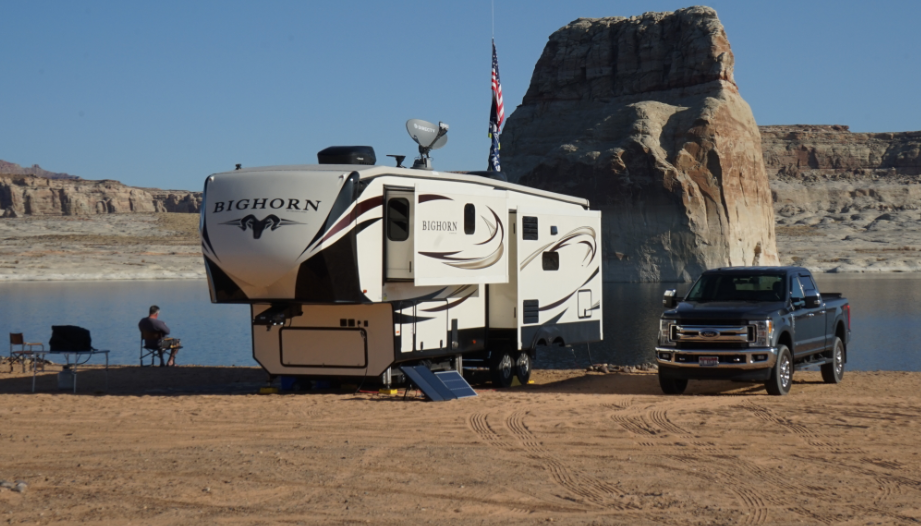
In contrast, towing a camper requires additional awareness, especially when navigating tight spaces, fuel stations, or campgrounds. For many travelers, this learning curve becomes an important factor in how often they choose to travel.
Smaller options such as a compact Class B campervan are often noted for their ease of driving, as they handle more like a standard vehicle while still providing basic travel amenities.
Convenience on the Road
A motorhome combines transportation and living space into a single unit, which can simplify travel. Quick stops become easier, and there is no need to set up or disconnect a separate trailer when arriving at a destination.
Trailers, on the other hand, require setup and breakdown at each stop. While this allows the tow vehicle to be used independently once parked, it also adds time and effort to each arrival and departure.
For travelers who prioritize simplicity and flexibility, having everything in one vehicle can make shorter trips and spontaneous travel more accessible.
Cost Considerations
Cost differences between motorhomes and trailers can vary widely depending on size and features. In general, trailers tend to have a lower initial purchase price. However, they often require a capable tow vehicle, which can significantly increase the total investment.
Motorhomes typically involve a higher upfront cost but consolidate transportation and lodging into one vehicle. In some cases, smaller motorhomes—such as a Mini-T Campervan—can serve multiple roles, functioning as both a travel vehicle and everyday transportation.
Looking at the total cost of ownership, including fuel, maintenance, insurance, and storage, often provides a clearer comparison than purchase price alone. For a deeper look at how these costs compare in real-world use, see Is It Cheaper to Tow a Camper or Drive a Motorhome?.
Towing Requirements and Equipment
Choosing a trailer requires careful consideration of towing capacity. Not all vehicles are equipped to safely pull a camper, and upgrading to a larger truck or SUV may be necessary.
In addition to the vehicle itself, towing often involves specialized equipment such as hitches, brake controllers, and weight distribution systems. These components add both cost and complexity to the setup.
Motorhomes eliminate the need for towing altogether, which can simplify the overall travel experience for many users.
Parking and Storage
Parking is another important factor, especially for travelers who spend time in urban areas or campgrounds with limited space. Larger motorhomes and trailers can be challenging to park and may require advance planning.
Trailers offer the advantage of being detachable, allowing the tow vehicle to be used independently once parked. However, they still require adequate space for storage when not in use.
Smaller motorhomes, particularly those designed with everyday usability in mind, are often easier to park and store. Some compact options are even compatible with residential garages, which can reduce storage costs and improve accessibility.
Choosing Based on How You Travel
Both motorhomes and trailers offer unique benefits, and neither is universally better than the other. The decision often comes down to how you plan to travel.
Travelers who prefer extended stays in one location may appreciate the flexibility of a trailer setup. Those who value ease of movement, simpler logistics, and more frequent trips often lean toward motorhomes.
Understanding your travel habits—whether that involves long stays, frequent short trips, or a mix of both—can help guide the decision more effectively than focusing on features alone.
A Practical Perspective
As travel habits continue to evolve, many buyers are placing greater emphasis on simplicity, flexibility, and ease of use. Smaller, more manageable RV options are becoming increasingly popular for this reason.
Ultimately, the best choice is the one that fits comfortably into your routine and encourages you to travel more often.
Happy Camping!
DLM-Distribution / Campervans is a licensed manufacturer and dealer located in Lake Crystal, Minnesota, serving clients around the country.
Contact Dave: 651-285-7089 or Candy: 507-382-9446 today!